Top Benefits of Phosphating Steel Wire for Global Buyers?
Phosphating Steel Wire offers various advantages that appeal to global buyers. This treatment enhances corrosion resistance, a crucial factor for steel's longevity and durability. By applying a layer of phosphate, manufacturers ensure better adhesion of coatings and paints. This process significantly extends the wire’s lifespan, which is vital for various applications.
The benefits of phosphating are not limited to protection alone. It also improves the wire's surface characteristics, making it smoother and easier to handle in production. Despite these advantages, some may question the reliability of phosphated steel wire. Proper application and consistency in treatment are essential. Inconsistencies may lead to reduced performance, making it crucial for buyers to source from reputable suppliers with proven experience.
Understanding the implications of phosphating can guide buyers in their purchasing decisions. Phosphating Steel Wire represents a blend of cost-effectiveness and enhanced performance. However, it is essential to weigh these benefits against potential downsides. Buyers must analyze their specific needs and consider the quality of the phosphating process.
Benefits of Phosphating Steel Wire for Enhanced Corrosion Resistance
Phosphating steel wire has become essential for buyers worldwide, primarily for enhancing corrosion resistance. This process coats the steel with a layer of phosphate, creating a protective barrier against environmental factors. The result is a notable increase in durability, especially in harsh conditions.
Corrosion can lead to significant costs over time. It weakens structural integrity and requires regular replacements. Phosphated steel wire helps prolong the lifespan of products and reduces maintenance needs. It's useful in various applications, from construction to automotive manufacturing.
Tips for choosing steel wire: Always check the thickness of the phosphated layer. This impacts corrosion resistance. Consider the environment where the wire will be used. Certain conditions may require specific types of phosphate coatings. Lastly, consult with experts in the field to ensure you understand your needs. A well-informed choice can lead to better performance and cost savings over time.
Impact of Phosphating Process on Surface Properties of Steel Wire
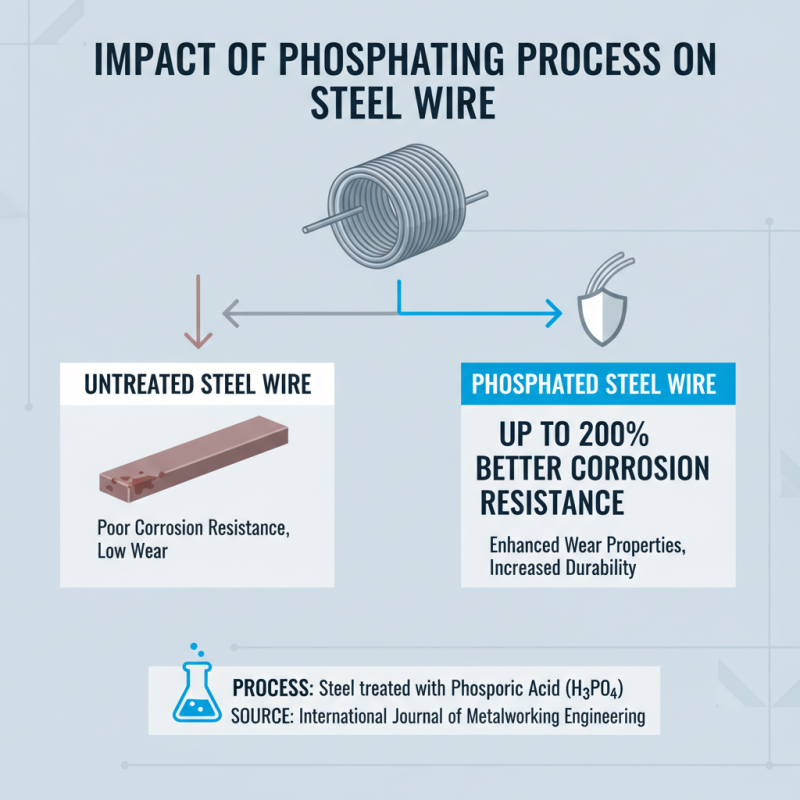
Phosphating is a vital process in improving the surface properties of steel wire. It involves treating the wire with phosphoric acid, which enhances its corrosion resistance and wear properties. A study from the International Journal of Metalworking Engineering indicates that phosphated steel wires can show up to 200% better corrosion resistance than untreated wires. This is crucial for manufacturers aiming for durability in their products.
Additionally, the phosphating process adds a microscopic layer of phosphate crystals on the steel surface. This layer serves as a foundation for subsequent coatings, such as paint or powder. A report by the Surface Engineering Society reveals that a proper phosphating treatment increases adhesion strength by up to 30%. Such improvements in adhesion are significant for industries where paint quality directly affects performance and longevity.
Despite these advantages, there can be inconsistencies in the phosphating process. Variations in concentration, temperature, and duration can lead to uneven coating. This inconsistency raises concerns about quality control. Buyers should be aware of these factors when selecting suppliers. Ensuring reliable phosphating processes is essential for maximum benefits.
Cost-effectiveness of Phosphated Steel Wire in Various Industries
Phosphated steel wire is gaining traction in various industries due to its cost-effectiveness. This treatment enhances corrosion resistance, making wire more durable. Buyers often report lower maintenance costs with phosphated wire, which can lead to significant long-term savings. The application of phosphating allows the wire to resist harsh environments, such as chemicals and moisture. This makes it a smart choice for construction and automotive sectors.
Moreover, phosphated steel wire can improve the bonding of coatings and paints. This attribute is particularly beneficial in manufacturing processes. However, not all phosphating processes yield the same benefits. Some may require more energy or chemicals, which could offset savings. Evaluating the specific requirements of a project is crucial for buyers. The effectiveness of phosphating might differ based on the application or environmental factors.
Additionally, the market for phosphated steel wire can be complex, with variations in quality and processing methods. Buyers should thoroughly assess suppliers to ensure they deliver reliable products. Understanding these nuances can mitigate potential pitfalls. This proactive approach helps industries make informed decisions that align with their budget and overall goals.
Top Benefits of Phosphating Steel Wire for Global Buyers
| Industry |
Main Benefit |
Cost-Effectiveness (per ton) |
Typical Applications |
| Automotive |
Enhanced corrosion resistance |
$500 |
Spring manufacturing, wire harnesses |
| Construction |
Improved adhesion for coatings |
$450 |
Reinforcement bars, mesh |
| Electronics |
Electrical conductivity |
$600 |
Connectors, wire harnesses |
| Manufacturing |
Increased durability and lifespan |
$550 |
Industrial machinery, fasteners |
| Aerospace |
Weight reduction |
$700 |
Aircraft components, wire ropes |
Phosphating vs. Other Coating Methods: A Comparative Analysis
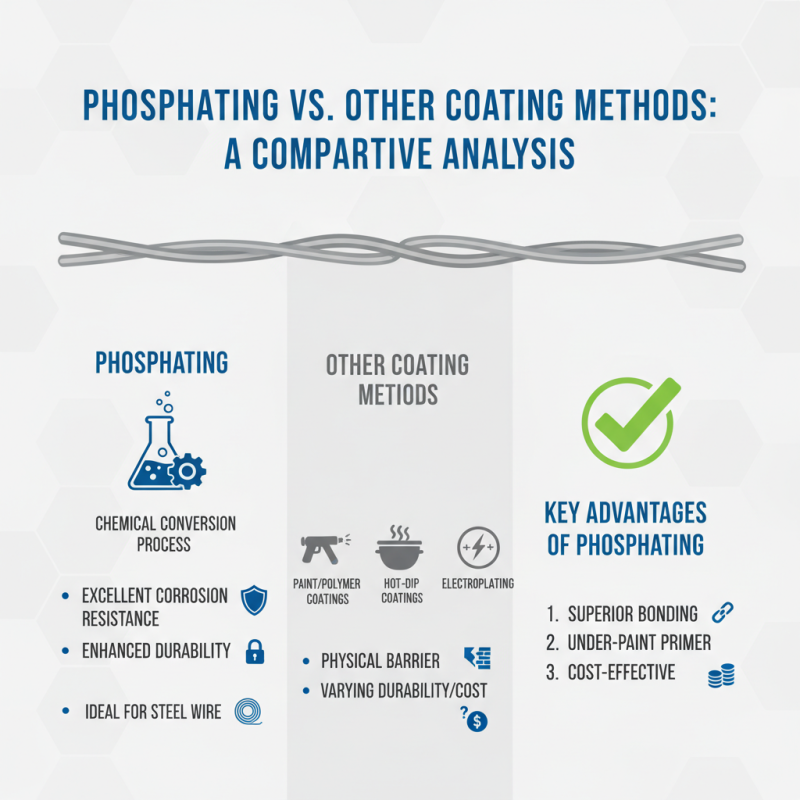
Phosphating is a popular method for treating steel wire. It provides excellent corrosion resistance, which is essential for durability. Compared to other coating methods, phosphating involves a chemical conversion process. This process creates a protective layer on the steel surface, enhancing its resilience against environmental factors.
When comparing phosphating with traditional coatings, such as painting or powder coating, phosphating has unique advantages. Unlike paint, phosphating bonds chemically to the surface. This ensures better adhesion and longevity. Additionally, unlike powder coatings, which can chip easily, phosphating is less prone to damage under harsh conditions. However, phosphating may not provide the same aesthetic appeal as other coatings, which can be a drawback for some buyers.
Despite its benefits, phosphating is not flawless. The process requires precise control of temperature and time to achieve optimal results. If not managed correctly, the coating may be uneven or ineffective. This calls for rigorous quality control during production. Buyers must be aware of these variables to ensure they receive high-quality coated steel wire.
Global Market Trends and Demand for Phosphated Steel Wire Products
The global market for phosphated steel wire products is witnessing significant growth. According to a report by Industry Research, the demand for phosphated steel wire is expected to increase by 5% annually until 2027. This rise is driven by various industries, including automotive and construction, where corrosion resistance is essential.
Phosphating enhances the wire’s resistance to corrosion. This makes it more suitable for various applications. The treatment also improves paint adherence, leading to better aesthetic outcomes in finished products. Additionally, studies show that phosphated steel wire exhibits superior wear characteristics. These qualities make it a preferred choice in competitive global markets.
Tips: When selecting phosphated steel wire, ensure it meets your specific needs, such as diameter and coating thickness. Conduct regular inspections to assess any wear or corrosion. Collaborating with experienced suppliers can enhance product reliability and performance.
Top Benefits of Phosphating Steel Wire for Global Buyers
This bar chart illustrates the top benefits of phosphating steel wire, highlighting key advantages such as corrosion resistance, adhesion improvement, lubrication enhancement, surface preparation, and cost efficiency. The percentages represent the perceived value of each benefit among global buyers, indicating a strong demand for phosphated steel wire products in the market.