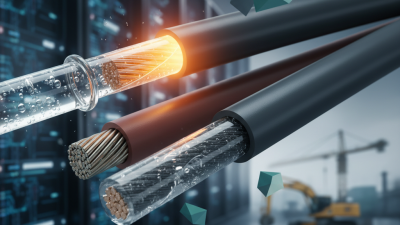
2026 Top Sheath Cable Materials for Global Buyers
Choosing the right Sheath Cable Material in 2026 requires more than comparing prices or copying a supplier specification. Global buyers must evaluate flexibility, abrasion resistance, temperature stability, chemical exposure, and installation conditions together. A cable installed inside a factory faces different risks from one buried underground or exposed on a coastal construction site.
This guide examines widely used sheath materials, including PVC, PE, LSZH compounds, PUR, and specialized fluoropolymers. Each option offers practical strengths and compromises. PVC can provide cost efficiency and reliable processing, while PE often performs well against moisture. LSZH materials support smoke-conscious environments, but their mechanical performance varies by formulation. PUR may resist abrasion effectively, although its higher cost can affect large projects.
Details matter. A cable sample that bends smoothly at room temperature may stiffen during winter transport. A datasheet may mention chemical resistance without describing concentration, exposure time, or repeated contact. These gaps deserve careful questions. They also reveal why laboratory values cannot replace field experience.
Reliable purchasing decisions should combine manufacturer documentation, test reports, traceable production records, and application-specific consultation. Buyers should confirm relevant regional requirements before approving a material, because market expectations and project specifications differ. No single sheath compound solves every problem. That is the uncomfortable part. Material selection remains a balance between performance, service life, compliance, availability, and total cost. This overview offers a practical framework for comparing those factors with greater confidence.
What Cable Sheaths Do: Protection, Insulation, and 2026 Buyer Criteria
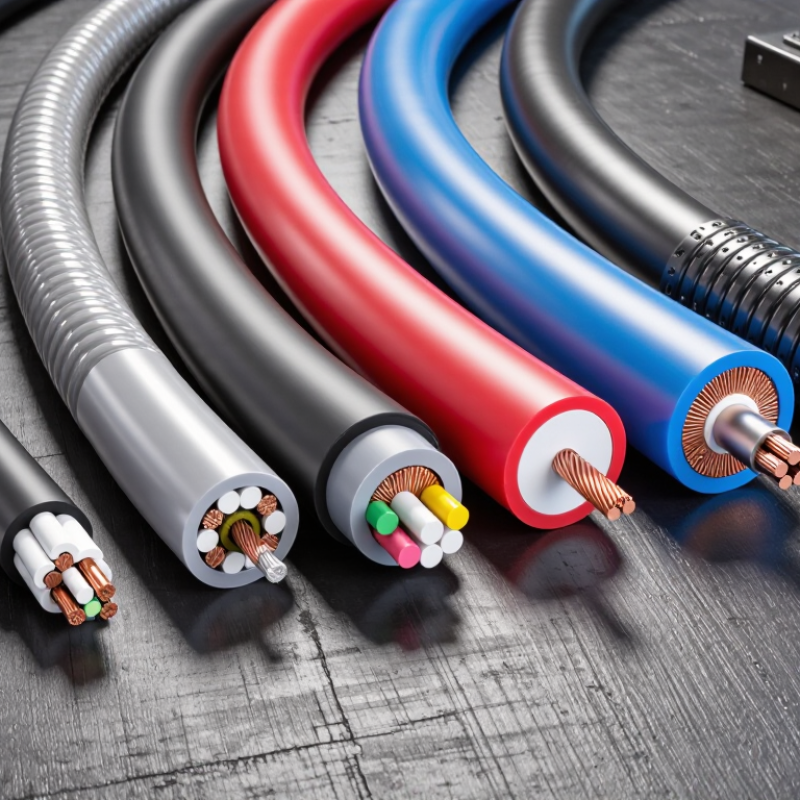
An outer sheath is not decorative. It shields the cable from water, abrasion, sunlight, chemicals, and mechanical stress. The conductor insulation protects against electrical leakage, while the sheath adds a tougher environmental barrier. PVC remains practical for general indoor and industrial use. Polyethylene performs well against moisture. Low-smoke, halogen-free compounds suit enclosed public spaces. Polyurethane deserves attention where repeated bending or abrasion is expected.
Demand is becoming harder to predict. The International Energy Agency’s Electricity 2024 report forecasts global electricity demand growth of about 3.4% annually through 2026. IRENA recorded 473 GW of renewable capacity additions in 2023. More installations mean more cables exposed to heat, wind, moisture, and ultraviolet radiation. A low-cost sheath may pass a factory test, yet fail beside a hot rooftop or a vibrating machine. That shortcut often fails.
Buyers should check temperature range, flame behavior, water resistance, flexibility, chemical exposure, and installation method. IEC 60502-1 provides a useful reference for many low-voltage and medium-voltage cable applications. Request test evidence, not only a material name. Verify aging performance after heat, bending, and moisture exposure. A halogen-free sheath is not automatically the best sheath. It may need different processing and stronger quality control. The material decision is rarely perfect; site conditions should decide the compromise.
LSZH Materials: IEC 60754 Halogen Limits and IEC 61034 Smoke Testing
2026 Top Sheath Cable Materials for Global Buyers
LSZH sheath materials are judged by more than low smoke claims. Their performance depends on compound design, wall thickness, processing, and test preparation. Polyolefin-based formulations are widely selected because they can limit halogen release during fire exposure. However, a material that looks clean during a small workshop burn may perform differently in a certified test.
IEC 60754 evaluates gases released during combustion. IEC 60754-1 measures halogen acid gas, while IEC 60754-2 examines acidity and conductivity. Buyers should request test reports showing the exact compound, cable construction, and conditioning method. Typical evidence includes pH of at least 4.3 and conductivity no higher than 10 μS/mm under the relevant procedure. These figures need careful interpretation. They are not a substitute for reviewing the full report.
Smoke visibility matters too. IEC 61034 testing measures light transmittance inside a defined chamber. Many LSZH cable specifications refer to a minimum transmittance of 60%, but the required value can vary by project. A dense black sheath may also affect visual inspection, even when its smoke result is acceptable. Factory trials should check extrusion temperature, surface cracking, filler dispersion, and flexibility after aging. Small defects matter. In practice, purchasing teams sometimes focus on certificates and overlook installation bending or storage humidity. That mistake deserves reconsideration. Reliable sourcing combines laboratory evidence with samples tested under realistic conditions.
2026 Top Sheath Cable Materials for Global Buyers
LSZH Materials: IEC 60754 Halogen Limits and IEC 61034 Smoke Testing
The chart summarizes commonly referenced threshold criteria for low-smoke, zero-halogen sheath materials. IEC 60754-1 limits evolved halogen acid gas to 5.0 mg/g, IEC 60754-2 specifies a minimum pH of 4.3 and maximum conductivity of 10 μS/mm, and IEC 61034-2 requires at least 60% light transmittance in the smoke test. Values use their native units and are not directly comparable on one numerical scale.
Reference basis: IEC 60754-1, IEC 60754-2 and IEC 61034-2 test criteria. Actual cable performance depends on material formulation, construction and test conditions.
Global Selection Guide: Matching Sheath Materials to Standards and Environments
Global cable demand is becoming more environment-specific. The International Energy Agency’s Electricity 2024 report projects global electricity demand to grow by an average 3.2% annually through 2026. That expansion increases pressure on sheath selection, especially in infrastructure, renewable power, and industrial upgrades.
PVC remains practical for general indoor and low-cost installations. It offers balanced abrasion resistance and flame performance. Check IEC 60502-1 and IEC 60332-1-2 requirements before approval. For public buildings, LSZH compounds can reduce smoke and corrosive gas during fire. IEC 60754-1 and IEC 61034-2 testing should support that decision. LSZH is not automatically safer in every installation. Mechanical strength and moisture resistance may be weaker.
Outdoor routes need a different review. PE or HDPE sheaths suit buried cables because they resist water and many chemicals. They may require added flame protection indoors. PUR is useful near moving machinery, oil mist, and repeated bending, but its cost and hydrolysis performance need checking. CPE can handle heat, oil, and harsh industrial exposure, though formulation quality varies. I have seen material choices fail when buyers trusted a generic “weather-resistant” claim without testing UV, temperature cycling, and bending together. Match the sheath to the complete environment, then verify certificates, test methods, and installation limits. Standards guide selection; site evidence should challenge it.